

Carotid Intima-Media Thickness (CIMT)
Carotid Intima‑Media Thickness (CIMT) Screening
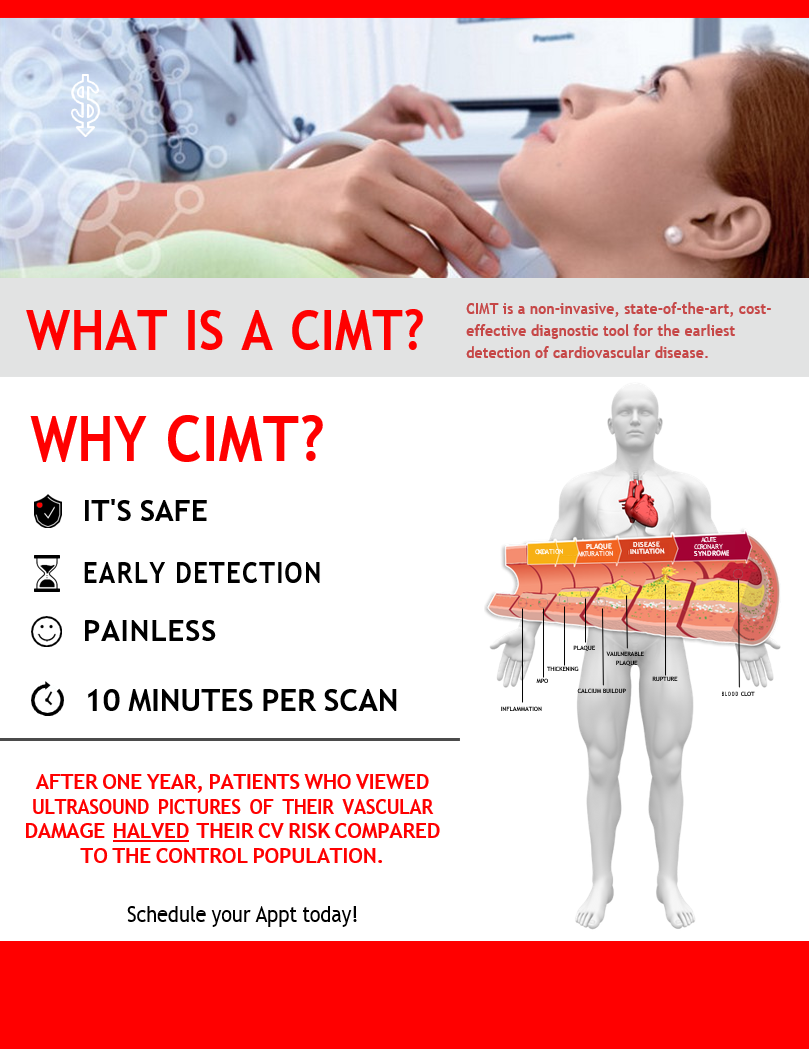
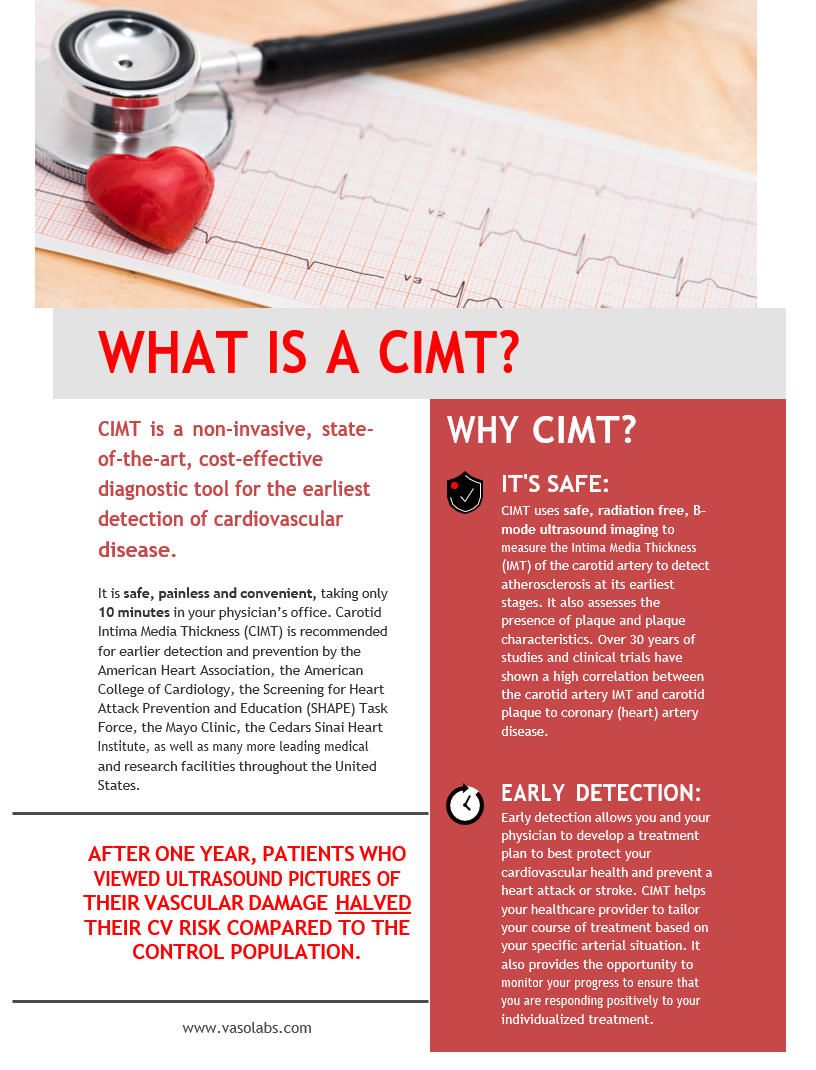
Carotid Intima‑Media Thickness (CIMT) is a non‑invasive ultrasound test that measures the thickness of the inner layers of your carotid arteries—the major blood vessels in your neck that supply blood to the brain. By evaluating these layers, CIMT helps identify early changes in the arterial wall that may indicate developing plaque or increased cardiovascular risk long before symptoms appear.
Unlike a standard carotid ultrasound, which looks for significant blockages, CIMT focuses on subtle, early structural changes. This makes it a valuable tool for people interested in proactive, preventive heart health. The test is quick, painless, radiation‑free, and provides a detailed report that can help guide personalized lifestyle and risk‑reduction strategies.
CIMT is especially useful for individuals with a family history of heart disease, elevated cholesterol, metabolic concerns, or anyone wanting a deeper understanding of their cardiovascular health.
FAQ
-
Carotid Intima-Media Thickness (CIMT) is an ultrasound test that measures the thickness of the inner two layers of the carotid arteries in your neck. This measurement helps estimate the amount of “hidden” plaque and early artery changes related to atherosclerosis (hardening of the arteries).
-
- It can detect early artery changes before you have symptoms or a major event like a heart attack or stroke.
- It helps refine your personal cardiovascular risk beyond standard labs and blood pressure readings.
- It allows your provider to track whether your prevention plan is stabilizing or improving your artery health over time.
-
CIMT is especially useful if you:
- Have a family history of heart disease or stroke.
- Have risk factors such as high blood pressure, high cholesterol, diabetes, metabolic syndrome, or smoking (current or past).
- Have inflammatory or autoimmune conditions that may increase cardiovascular risk.
- Want a more detailed, preventive assessment of your heart and vascular health.
-
- You lie on your back on an exam table (or sitting in a chair) with your head slightly turned to the side.
- A small amount of gel is placed on your neck.
- A handheld ultrasound probe is gently moving along each side of your neck to take images and measurements of your carotid arteries.
- The test is painless, noninvasive, and does not use radiation.
- The scan usually takes about 15–30 minutes.
-
- You can eat and drink normally unless your provider gives you other instructions.
- Wear a shirt or top that allows easy access to your neck (e.g., avoid high collars or tight turtlenecks).
- Take your usual medications unless told otherwise.
-
Your report may include:
- A measurement of the thickness of the artery wall (intima-media thickness) compared to what is typical for your age and sex.
- Information about any soft or calcified plaque seen in the artery.
- A risk category (for example, low, moderate, or high risk) based on your measurements and findings.
Your provider will interpret the results in the context of your overall health, labs, lifestyle, and family history, and may recommend:
- Nutrition and lifestyle changes.
- Supplements or medications to improve cholesterol, inflammation, blood pressure, or blood sugar.
- Follow-up CIMT testing to monitor progress (for example, every 6 month or every 1–3 years, depending on your risk).
-
- CIMT is safe, painless, and does not involve needles, contrast dye, or radiation.
- It does not replace emergency care, stress testing, or other cardiac imaging if you have active chest pain or significant symptoms.
- It is one piece of your cardiovascular risk assessment, not the only factor.
-
You may want to ask:
- How do my CIMT results compare to what is typical for my age?
- Does my CIMT result change my estimated risk for heart attack or stroke?
- What specific steps should I take now to improve my artery health?
- When should I repeat a CIMT test?

Why Personalized Prevention Matters
With so many supplements and diet options available, it can be hard to know where to start.
Our team helps you focus on what your body actually needs, using lab and genomic insights to choose the most effective nutrition and supplement strategies for long-term wellness.