
The Glymphatic System: How Your Brain Detoxes While You Sleep
Sleeping Your Way To Better Brain Health
Most people know that sleep is important. What you probably don’t know about is what your brain gets up to while you're out for the night. As it turns out, sleep is when your brain runs its most critical maintenance cycle, a detoxification process that scientists didn't even know existed until 2012. When it doesn't work properly, the consequences may quietly build for years before you notice them.
At the center of this process is the glymphatic system, a specialized waste removal network that activates during sleep to flush out the metabolic byproducts that build up throughout the day. When sleep is consistently poor or too short, that system cannot do its job. Over time, the resulting accumulation of toxic proteins, including amyloid-beta and tau, may quietly raise the risk of cognitive decline and neurodegenerative diseases like Alzheimer's.
Key Takeaways
The glymphatic system is the brain's built-in waste clearance network, operating primarily during deep, restorative sleep.
During slow-wave (NREM) sleep, cerebrospinal fluid flushes through the brain's perivascular spaces, clearing toxic proteins like amyloid-beta and tau.
Disrupted sleep, including from sleep apnea, poor sleep habits, or chronic stress, can impair glymphatic clearance and may increase the risk of Alzheimer's disease and other neurodegenerative conditions.
Glymphatic function naturally declines with age, making quality sleep increasingly important as we get older.
Lifestyle factors including sleep position, exercise, and circadian rhythm alignment can meaningfully support how well your brain detoxifies each night.
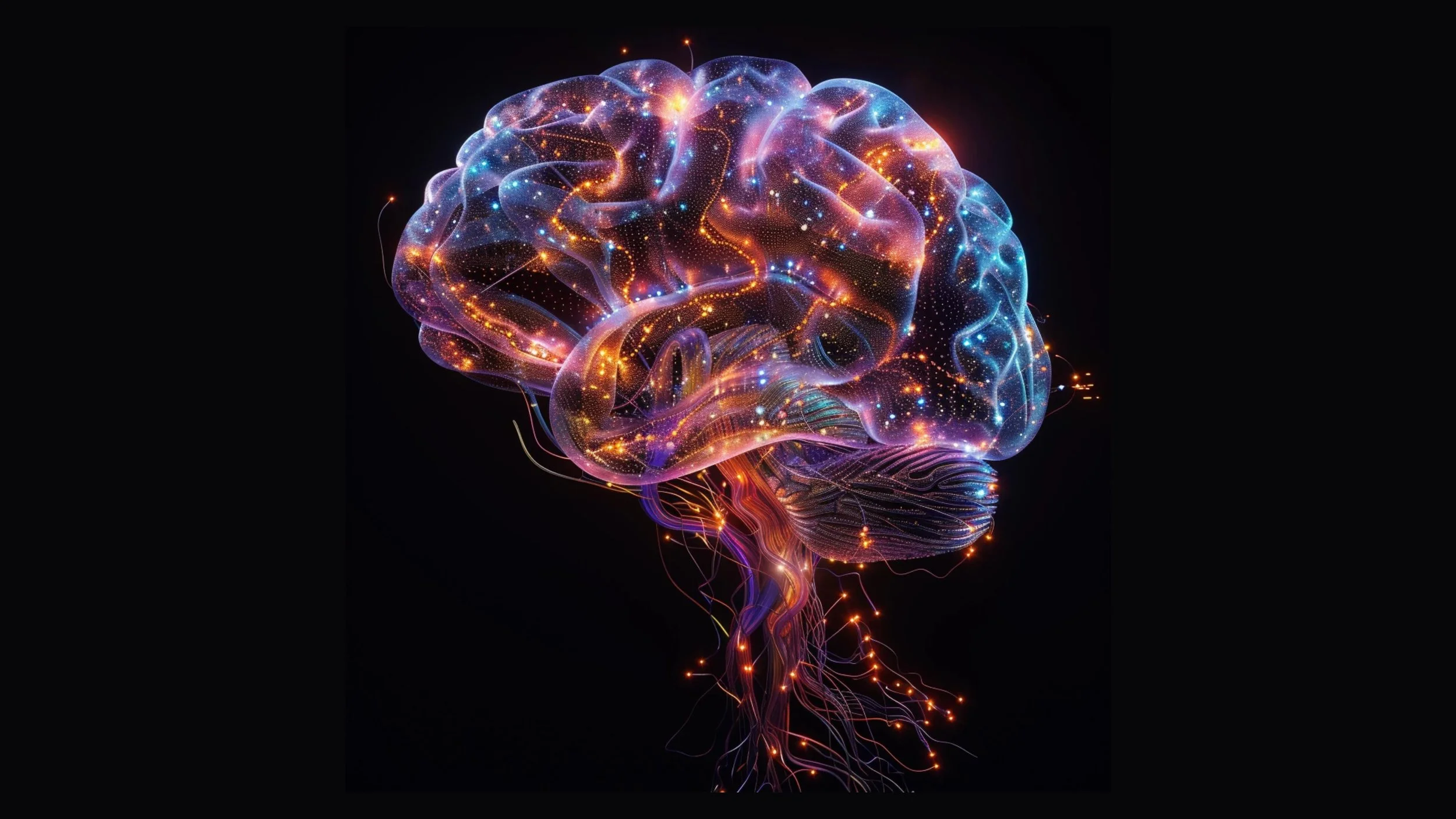
What Is the Glymphatic System?
The glymphatic system is the brain's dedicated waste clearance pathway, a network of fluid channels that runs alongside the brain's blood vessels to remove metabolic waste from the central nervous system. Think of it as the brain's equivalent of the lymphatic system that’s found throughout the rest of the body, responsible for flushing out cellular debris, misfolded proteins, and other byproducts of normal neural activity.
The name was coined by Maiken Nedergaard, a neuroscientist at the University of Rochester, who combined "glial" (the type of brain cell that powers the system) with "lymphatic" (the body's existing waste-removal network) to describe what she and her colleague Jeffrey Iliff discovered in 2012. Together, they mapped how cerebrospinal fluid, the clear fluid that surrounds the brain and spinal cord, flows into brain tissue, mixes with the fluid between brain cells, and carries waste out.
The whole process depends on a specialized protein called aquaporin-4, or AQP4, which acts as a tiny water channel built into the walls of brain cells. These channels allow fluid to move quickly and efficiently through the brain. When researchers removed AQP4 in animal studies, waste clearance dropped by as much as 70%, underscoring just how central this one protein is to keeping the brain clean.
How the Glymphatic System Works During Sleep
The brain does not run its cleaning cycle around the clock. It waits for sleep, specifically the deep, slow-wave stages most people know as NREM or deep sleep. That is when glymphatic activity peaks. Research published in Cell in 2025 found that as mice settled into deep sleep, a brain chemical called norepinephrine drops, and that drop triggers a kind of rhythmic pulsing in the brain's fluid channels, almost like a wave that sweeps waste out of the tissue.
A clinical trial confirmed this is happening in humans too. Participants who got a normal night of sleep woke up with measurably higher levels of amyloid-beta and tau in their bloodstream compared to those who were kept awake. That might sound counterintuitive, but it is actually a good sign. It means those proteins were successfully cleared from the brain overnight and moved into circulation to be processed and removed. The brain that looks quiet on the outside is running one of its most important jobs on the inside.

The Link Between Sleep And Alzheimer's Disease
The connection between glymphatic function and Alzheimer's disease centers on two proteins: amyloid-beta and tau. Both accumulate in the brains of people with Alzheimer's, and both are cleared during sleep via glymphatic pathways. In animal models, glymphatic impairment alone is sufficient to drive the development of Alzheimer's-related pathology. In human studies, short sleep duration and poor sleep quality are consistently associated with greater amyloid-beta and tau burden, even before any cognitive symptoms appear.
When sleep is disrupted, whether from insomnia, sleep disorders like obstructive sleep apnea, or chronically shortened sleep duration, the glymphatic system cannot complete its nightly clearing work. This is when protein accumulation begins. Over years and decades, this may quietly contribute to the plaques and tangles that define Alzheimer's disease. The relationship is bidirectional as well: Alzheimer's itself disrupts sleep, which further impairs clearance and accelerates the cycle.
Common Conditions Associated With The Glymphatic System?
The consequences of glymphatic dysfunction extend well beyond Alzheimer's disease. As research in this area has grown, a number of neurological and neurocognitive conditions have been linked to impaired brain clearance:
Parkinson's disease, where alpha-synuclein protein accumulation is a hallmark, has been associated with reduced glymphatic clearance.
Normal pressure hydrocephalus (NPH), a condition more common in older adults that causes gait problems, memory difficulty, and urinary issues, shows evidence of significantly impaired glymphatic flow.
Traumatic brain injury (TBI) disrupts glymphatic function both acutely and chronically, potentially contributing to long-term neurocognitive complications.
Obstructive sleep apnea (OSA) and hypopnea directly impair sleep stages needed for glymphatic activity, creating a pathway from breathing disruption to brain toxin accumulation.
Stroke, multiple sclerosis, migraine, and cerebral small vessel disease have all been linked to glymphatic dysfunction in recent research.

How Does Age Affect the Glymphatic System?
Glymphatic function naturally declines with age, and it happens on two fronts at once. First, the aquaporin-4 (AQP4) channels that power the system become less effective in older brains, slowing the flow of fluid through brain tissue. Second, sleep itself changes with age: deep, slow-wave sleep becomes shorter, lighter, and more fragmented. Less deep sleep means fewer hours for the brain's cleaning cycle to run. The result is a system that is already less efficient, working within a sleep environment that gives it less to work with.
This is not inevitable, but it does mean that the sleep disruptions that felt manageable at 35 can carry different consequences at 55 or 65. The brain's built-in buffer shrinks with age, so protecting sleep quality becomes one of the most practical things you can do for your long-term cognitive health.
Signs Your Glymphatic System May Not Be Functioning Optimally
There is no single diagnostic test for glymphatic function, but certain patterns may suggest the system is under stress:
Waking up feeling unrefreshed despite getting enough hours of sleep
Persistent brain fog, especially in the morning
Difficulty concentrating or retrieving words
Memory lapses that feel disproportionate to your age
Frequently disrupted sleep or waking multiple times through the night
Diagnosed sleep apnea or a history of disordered breathing during sleep
Increasing reliance on caffeine to feel functional
A pattern of poor sleep quality tied to stress, irregular schedules, or shift work

Factors That Support a Healthy Glymphatic System
Several lifestyle factors have a meaningful impact on how well the glymphatic system functions:
Deep, restorative sleep: Slow-wave sleep is the primary driver of glymphatic clearance. Protecting the quality and duration of NREM sleep stages is the single most important thing you can do to protect your glymphatic cycle.
Sleep position: Research suggests that sleeping on your side may optimize glymphatic flow compared to sleeping on your back or stomach, likely due to the angles of perivascular drainage channels.
Circadian rhythm alignment: Glymphatic activity follows the body's internal clock. Going to sleep and waking at consistent times supports the hormonal and physiological conditions that enhance slow-wave sleep.
Exercise: Regular physical activity supports brain clearance, likely through improved cerebrovascular function, reduced neuroinflammation, and better sleep quality overall.
Reducing chronic inflammation: Neuroinflammation impairs glymphatic flow. Managing metabolic health, blood sugar, and inflammatory load through nutrition and lifestyle directly affects the brain's ability to clear waste.
A Holistic Approach to Better Brain Detoxification
When you’re having trouble getting quality sleep, the answer is rarely as simple as better sleep hygiene. At Resilient Health, we take a root-cause approach to understanding what's getting in the way of restorative sleep and robust glymphatic function. That means evaluating the full picture: stress hormones and cortisol patterns, sex hormone fluctuations that disrupt sleep architecture, blood sugar instability that causes middle-of-the-night waking, inflammatory markers, thyroid function, and nutrient status.
Sleep problems rarely exist in isolation. They often reflect underlying metabolic or hormonal imbalances that, when addressed, transform both sleep quality and cognitive clarity. A personalized strategy might include targeted testing, dietary and lifestyle adjustments, support for circadian rhythm regulation, or evaluation for underlying sleep disorders like obstructive sleep apnea.
The goal is not just to sleep longer. It is to sleep in a way that gives your brain the deep, uninterrupted rest it needs to do its most important work.

Conclusion
Sleep is the foundation of brain health, and the glymphatic system is why. Every night of quality sleep is an opportunity for your brain to clear the proteins and waste products that, if left to accumulate, may gradually undermine your thinking, memory, and long-term neurological health. Supporting glymphatic function is not a niche concern for people worried about Alzheimer's. It is a core part of protecting cognitive vitality at every age. The investment is straightforward: prioritize deep, consistent sleep, address what is disrupting it, and let your brain do what it was designed to do.
Ready to take a closer look at your sleep and brain health?
At Resilient Health, we help you understand what your body is telling you and build a personalized plan to support your health from the inside out. Schedule a consultation today.
References
1. Iliff JJ, Wang M, Liao Y, et al. A paravascular pathway facilitates CSF flow through the brain parenchyma and the clearance of interstitial solutes, including amyloid-beta. Science Translational Medicine. 2012;4(147):147ra111.
2. Nedergaard M. Garbage truck of the brain. Science. 2013;340(6140):1529-1530.
3. Xie L, Kang H, Xu Q, et al. Sleep drives metabolite clearance from the adult brain. Science. 2013;342(6156):373-377.
4. Dagum P, Elbert DL, Giovangrandi L, et al. The glymphatic system clears amyloid beta and tau from brain to plasma in humans. Nature Communications. 2026. doi:10.1038/s41467-026.
5. Hablitz LM, Nedergaard M. The glymphatic system: a novel component of fundamental neurobiology. Journal of Neuroscience. 2021;41(37):7698-7711.
6. Corbali O, Levey AI. Glymphatic system in neurological disorders and implications for brain health. Frontiers in Neurology. 2025. doi:10.3389/fneur.2025.
7. Chen S, Wang H, Zhang L, et al. Glymphatic system: a self-purification circulation in brain. Frontiers in Cellular Neuroscience. 2025;19:1528995.
8. Yamamoto EA, Bagley JH, Geltzeiler M, et al. The perivascular space is a conduit for cerebrospinal fluid flow in humans. Proceedings of the National Academy of Sciences. 2024;121(42):e2407246121.
9. Fultz NE, Bonmassar G, Setsompop K, et al. Coupled electrophysiological, hemodynamic, and cerebrospinal fluid oscillations in human sleep. Science. 2019;366(6465):628-631.
10. Burfeind KG, Murchison CF, Bhatterai A, et al. The effects of noncoding aquaporin-4 single-nucleotide polymorphisms on cognition and functional progression of Alzheimer's disease. Alzheimer's & Dementia. 2017;3(3):348-359.
11. Eide PK, Ringstad G. Glymphatic MRI in idiopathic normal pressure hydrocephalus. Brain. 2017;140(10):2691-2705.
12. Lundgaard I, Lu ML, Yang E, et al. Glymphatic clearance controls state-dependent changes in brain lactate concentration. Journal of Cerebral Blood Flow & Metabolism. 2017;37(6):2112-2124.
13. Koundal S, Elkin R, Nadeem S, et al. Optimal mass transport with Lagrangian workflow reveals advective and diffusion driven solute transport in the glymphatic system. Scientific Reports. 2020;10:1990.
14. Liao Y, et al. Age-related decline in glymphatic function contributes to amyloid pathology in Alzheimer's disease. Nature Aging. 2023.
Disclaimer
The content on this blog is for informational purposes only and is not a substitute for professional medical advice, diagnosis, or treatment. Always consult your physician or another qualified health provider with any questions you may have about a medical condition.
